
The survey
I took a look at this entrance hallway in Clifton, Bristol a few weeks ago.
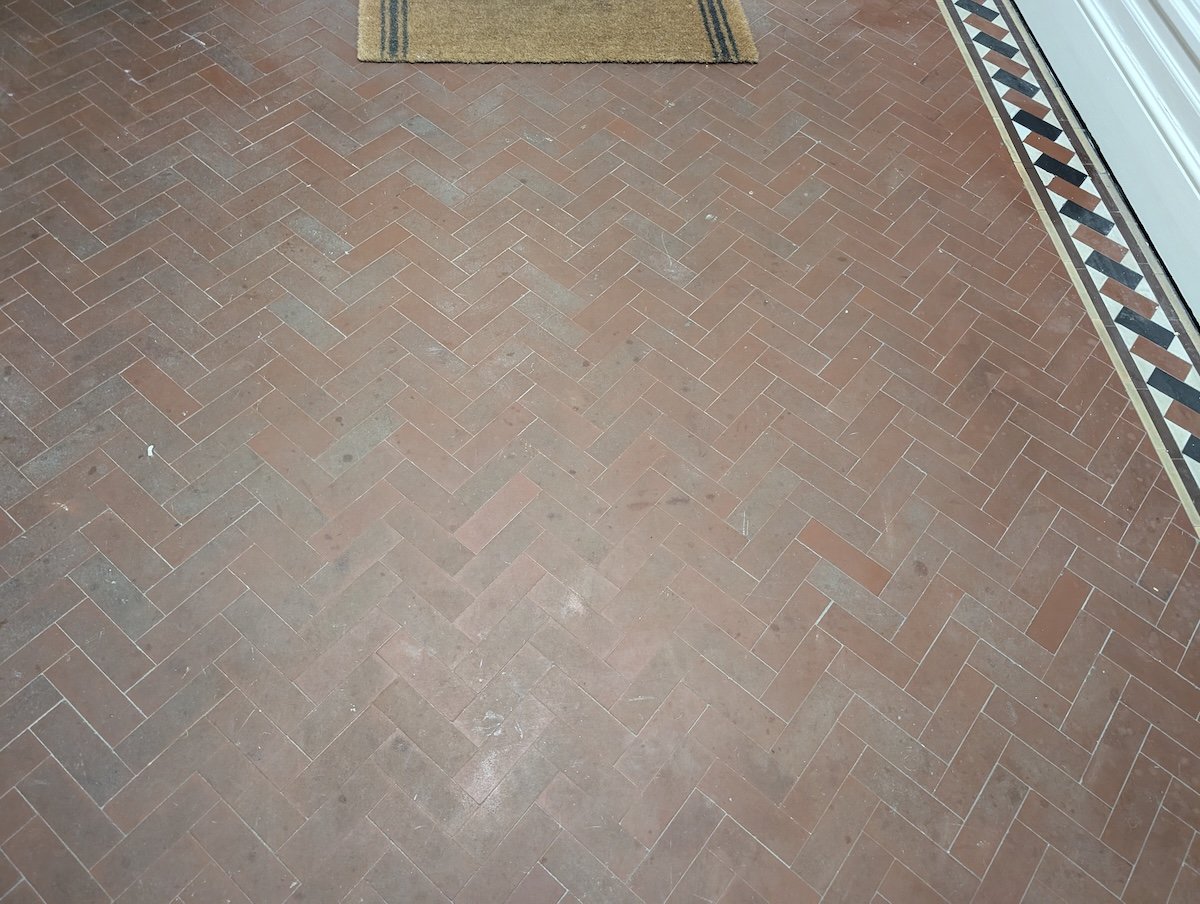
The owners had had decorators in to repaint the walls and wood features – unfortunately, the floor had not been protected and was covered in paint. Not only this, the tiles appeared very dull and had not been cleaned for quite some time.
The before images –
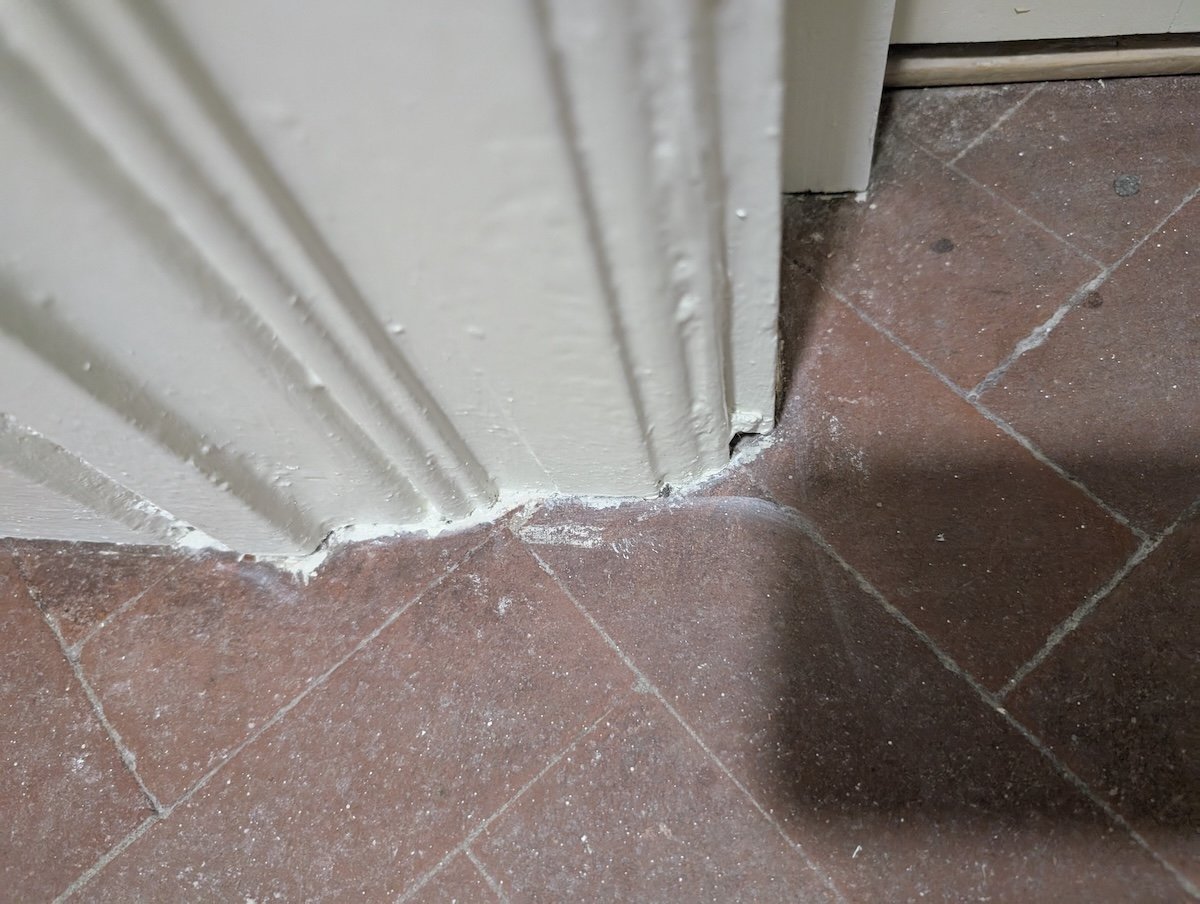
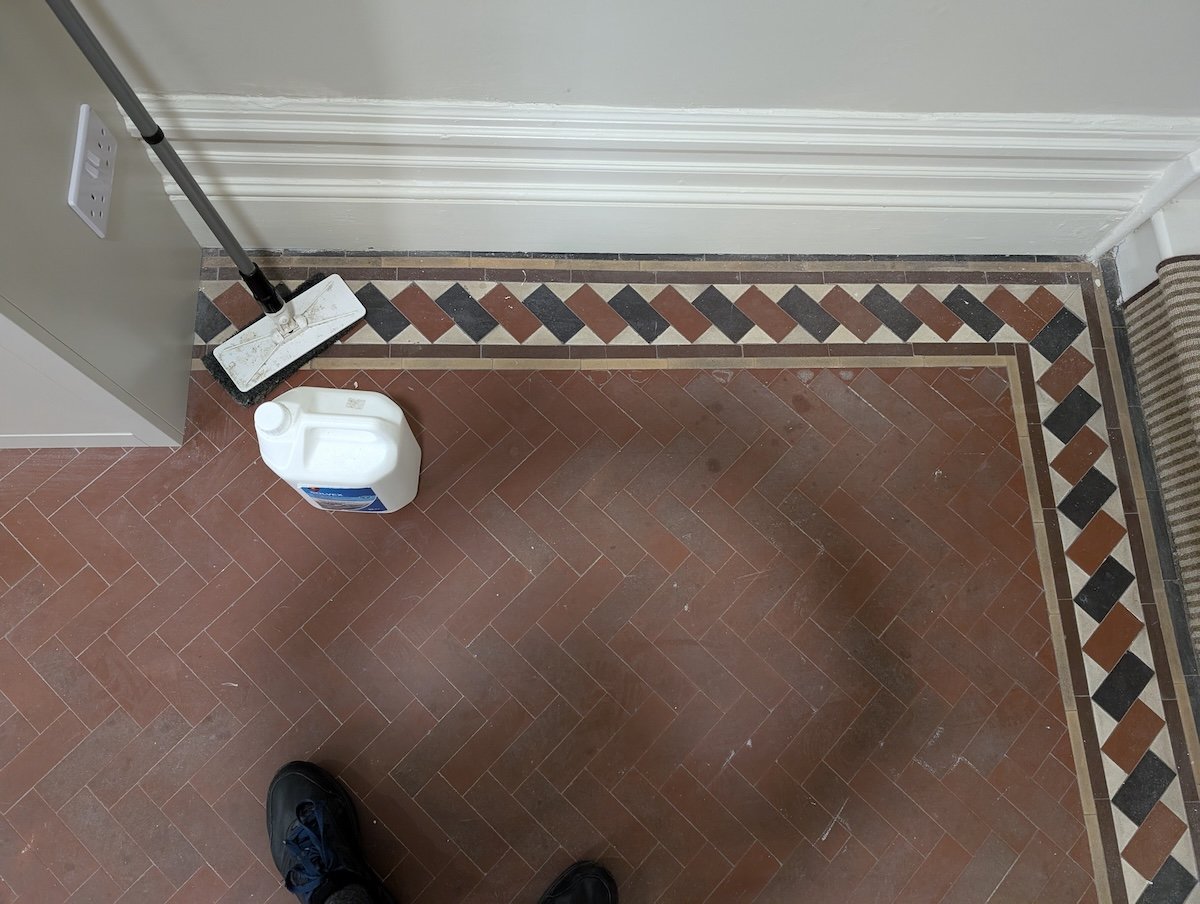
These man-made brick like tiles have an irregular surface which can easily trap dirt and paint. Once the contaminants become embedded in texture of the tile, they can prove very difficult to remove. The outer border are a less permeable Victorian/ Milton tile.
There might be a range of approaches to restoring a floor like this. In order to break down the paint, we opted to apply a stripper so that the paint became soluble and more easily recovered. However, scrubbing the floor with an aggressive brush might also achieve the same outcome.
Stripping the floor tiles
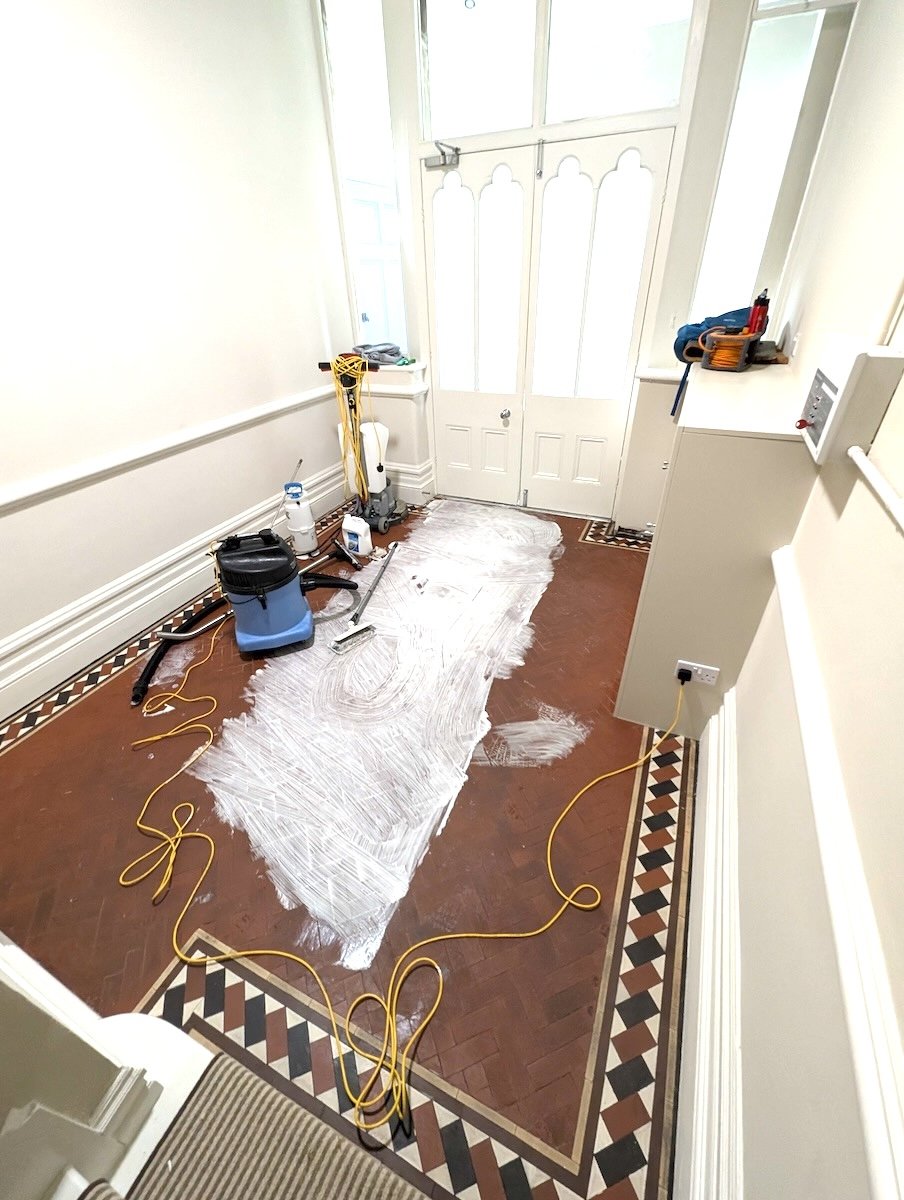
Using a floor stripping solution is best done in small sections. Because of its alcohol-like composition, this particular stripper would rapidly dry out unless replenished.
We applied the stripper in manageable sections to ensure it had maximum time to break down the paint on the floor, but also to maintain access for the residents.
Whilst the stripper was breaking down the paint, we occasionally used an aggressive floor pad to accelerate the process. In this way, the paint is dissolved both chemically and manually.
Although you can’t see them, we put up “wet floor” signage outside the front door and on the first floor landing!
Deep-cleaning the floor tiles
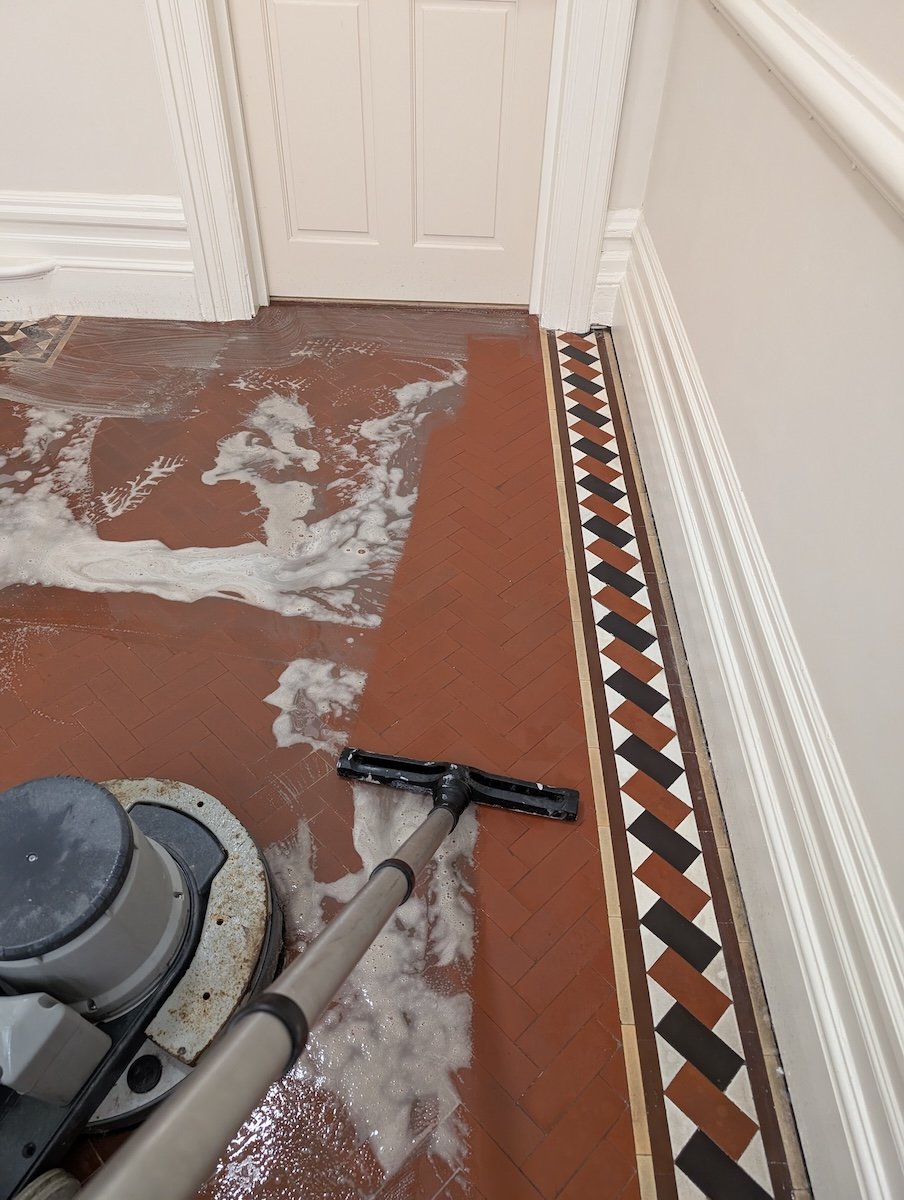
After we had stripped each section of the tiles, we used Ecoprotec Stone & Tile Intensive Floor Cleaner to rinse the stripper away and clean the floor. We used a weighted rotary machine with an aggressive pad to scrub the tiles to ensure a very deep clean was achieved.
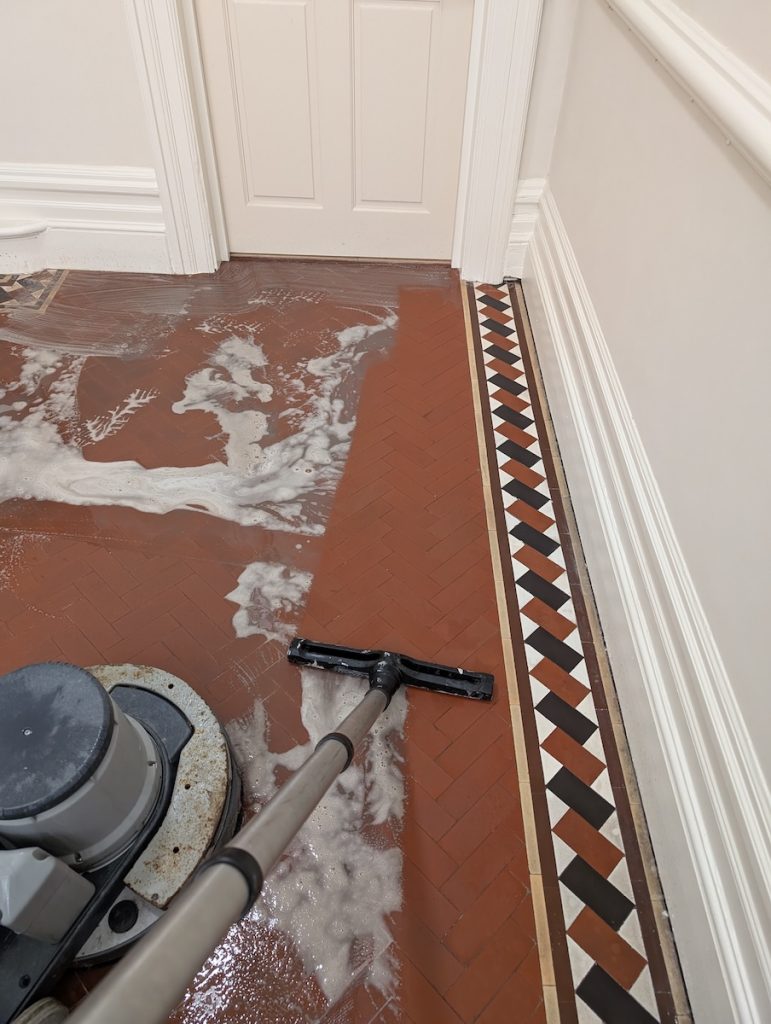
This process creates a thick slurry which is best recovered using a powerful wet vac.
The image shows just how powerful the cleaning action of stripper, followed by intensive floor cleaning solution is! It’s at this stage that we could see that we were going to achieve a satisfying level of restoration on this clean.
Sealing the floor tiles
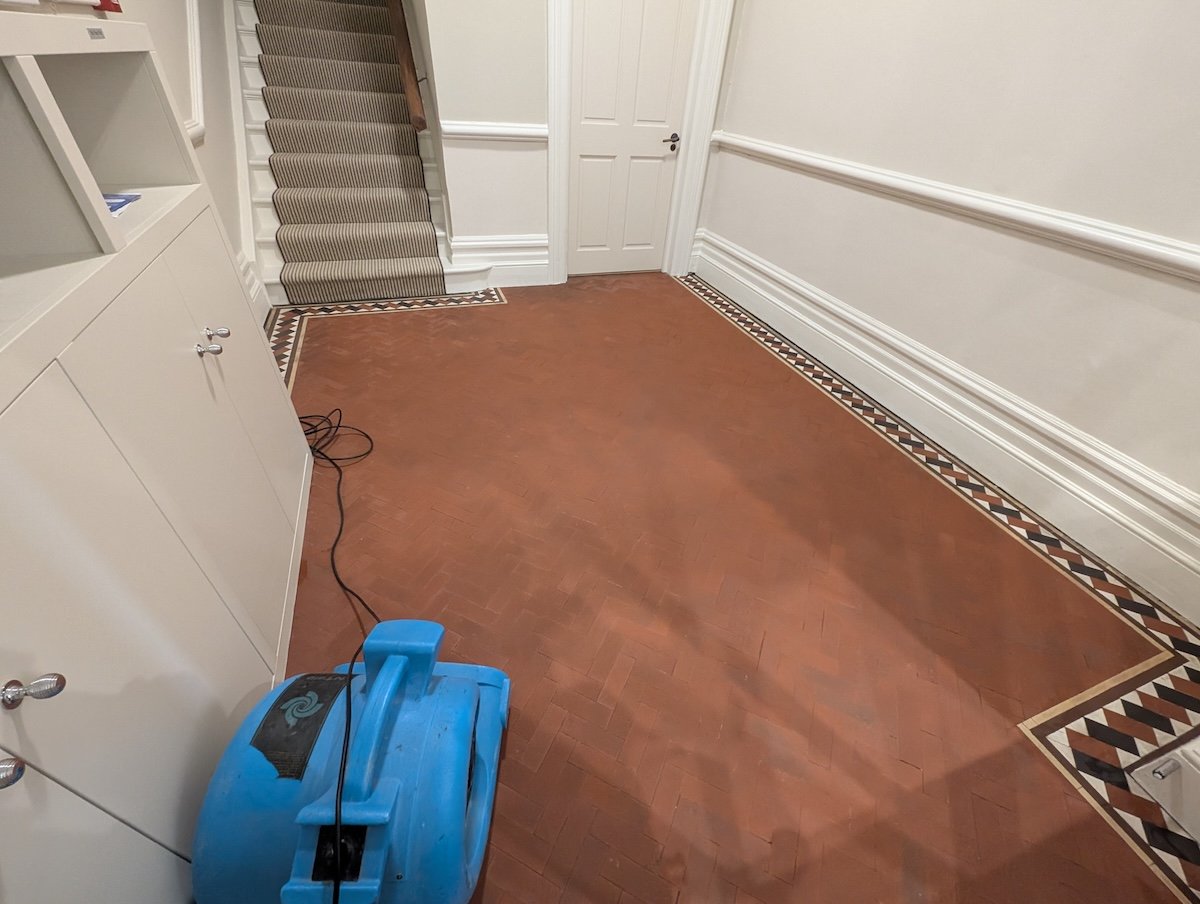
Once the floor had been completely cleaned and rinsed, we used an air-mover to accelerate the drying prior to sealing the floor.
Green Man will always apply fresh coats of seal to floor tiles that have been cleaned. In most cases, this will be an impregnating seal – this is the type of sealant that is absorbed into the tile to increase its resistance to spillages, enhance its colour and make maintenance cleaning more effective.
In most cases, we will use Ecoprotec Colour Enhancing Stone Sealer.
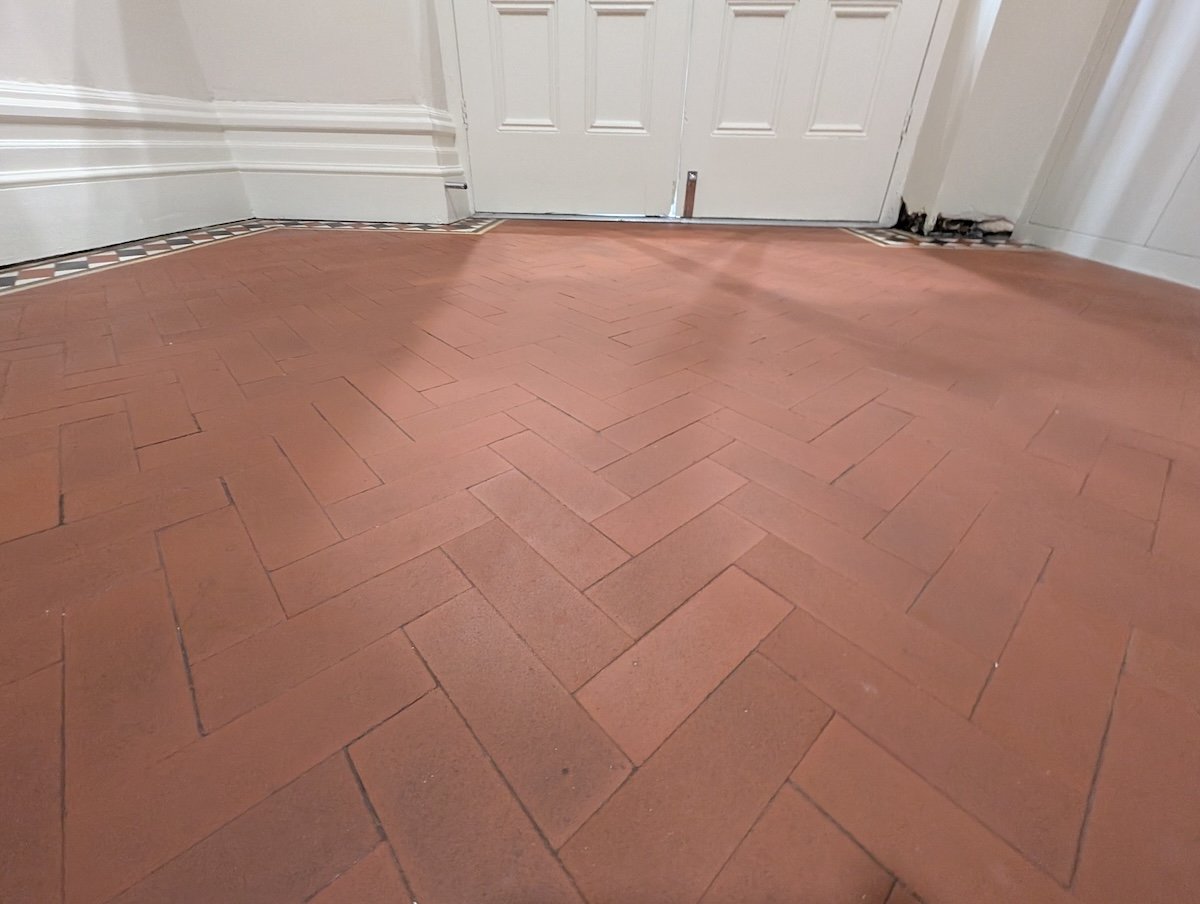
The following images are after the sea has been applied –
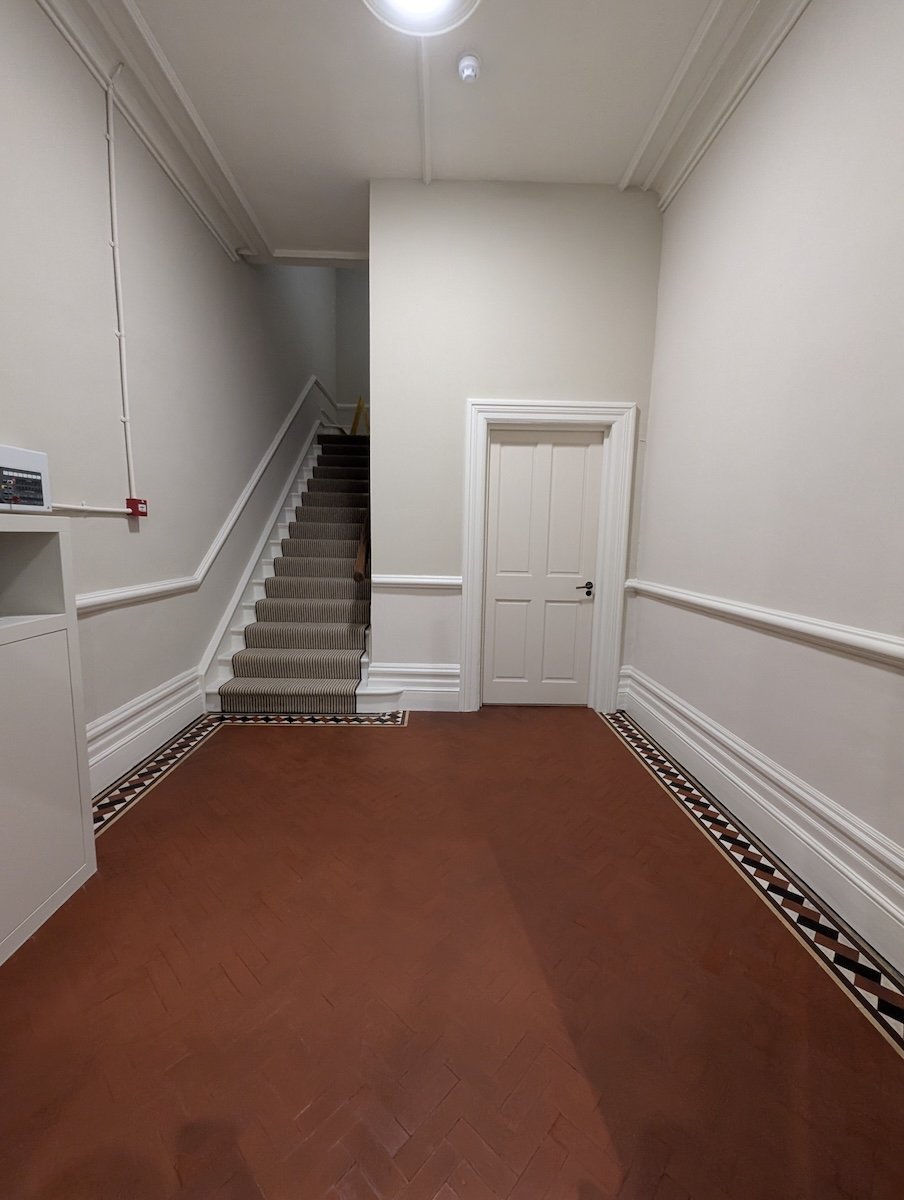
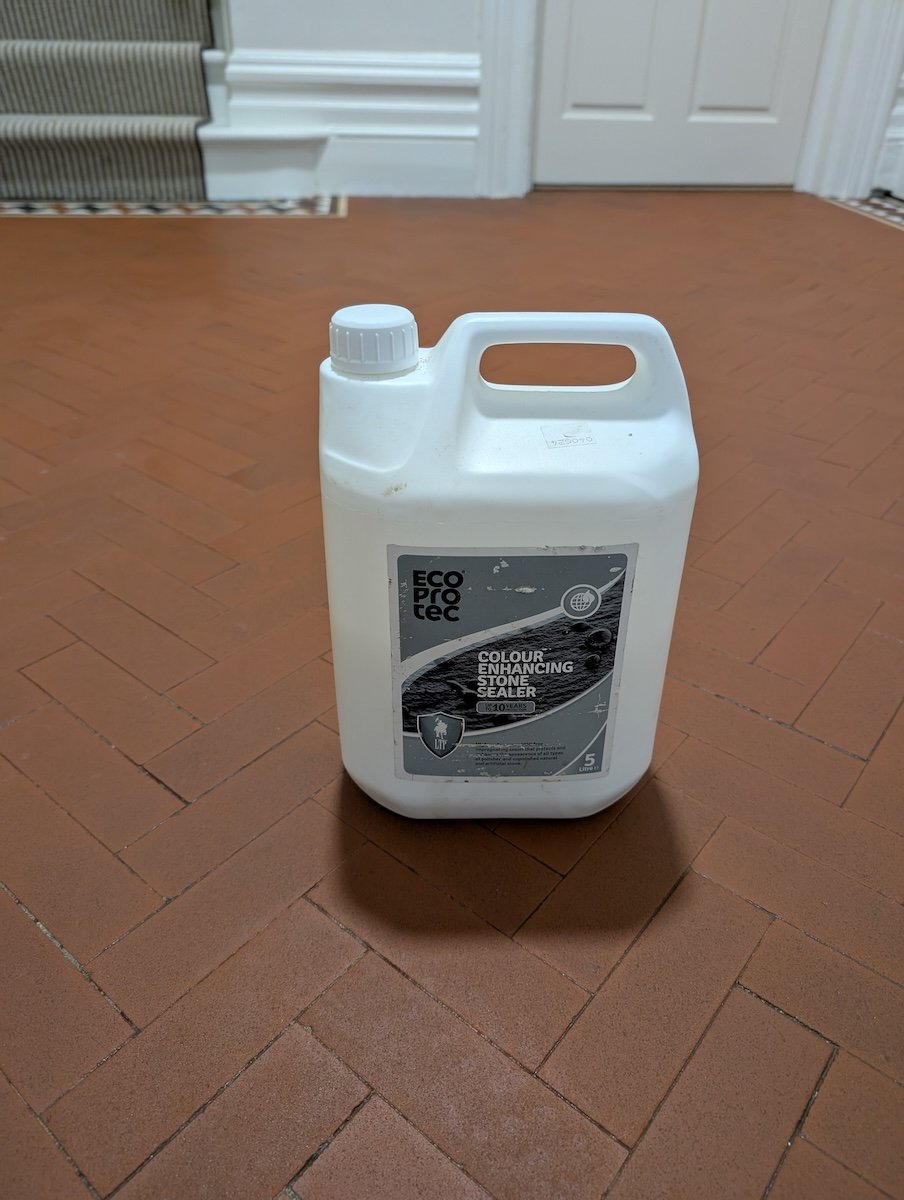
The finished result was a clean floor with no signs of the painters’ mess.
The tiles were fully deep-cleaned multiple times, allowed sufficient drying time and then enhanced with floor seal.
If you have any questions, or would like to find out about our hard floor services, just let us know.
Thanks for listening!